
Most National Historic Landmarks are buildings: courthouses, lighthouses, forts. Riverside, Illinois, is a whole town. Every curving street, every Victorian front porch, every triangular park tucked between intersections is part of a National Historic Landmark designation that the federal government made official in 1970. About 9,000 people live there. Most of the Chicago area has no idea it exists.
Riverside sits 12 miles west of the Loop, reachable on the Metra BNSF train in about 30 minutes. It was designed in 1869 as "a perfect village in a perfect setting"—the Riverside Improvement Company's stated goal when they commissioned the landscape architects who'd just built New York's Central Park to create America's first planned community. WTTW Chicago later named it one of the 10 towns that changed America. If you want the full story of how Frederick Law Olmsted shaped this place, we've written a dedicated post on his design and legacy. This post is about what to do when you get there.
What You Notice First
Walk around Riverside for five minutes and something feels different in the best way. The streets curve. There are no sharp corners, no numbered blocks, no grid to orient by. Small triangular parks appear at intersections. Houses sit well back from the curb behind deep front lawns, and no two homes look alike. A Tudor might sit next to a Victorian, which might be next to a Prairie style home, each one on its own terms. Olmsted described the effect he was after in 1868: "gracefully curved lines, generous spaces, and the absence of sharp corners... to imply leisure, contemplativeness, and happy tranquility." Walk the streets today and the description still fits exactly.
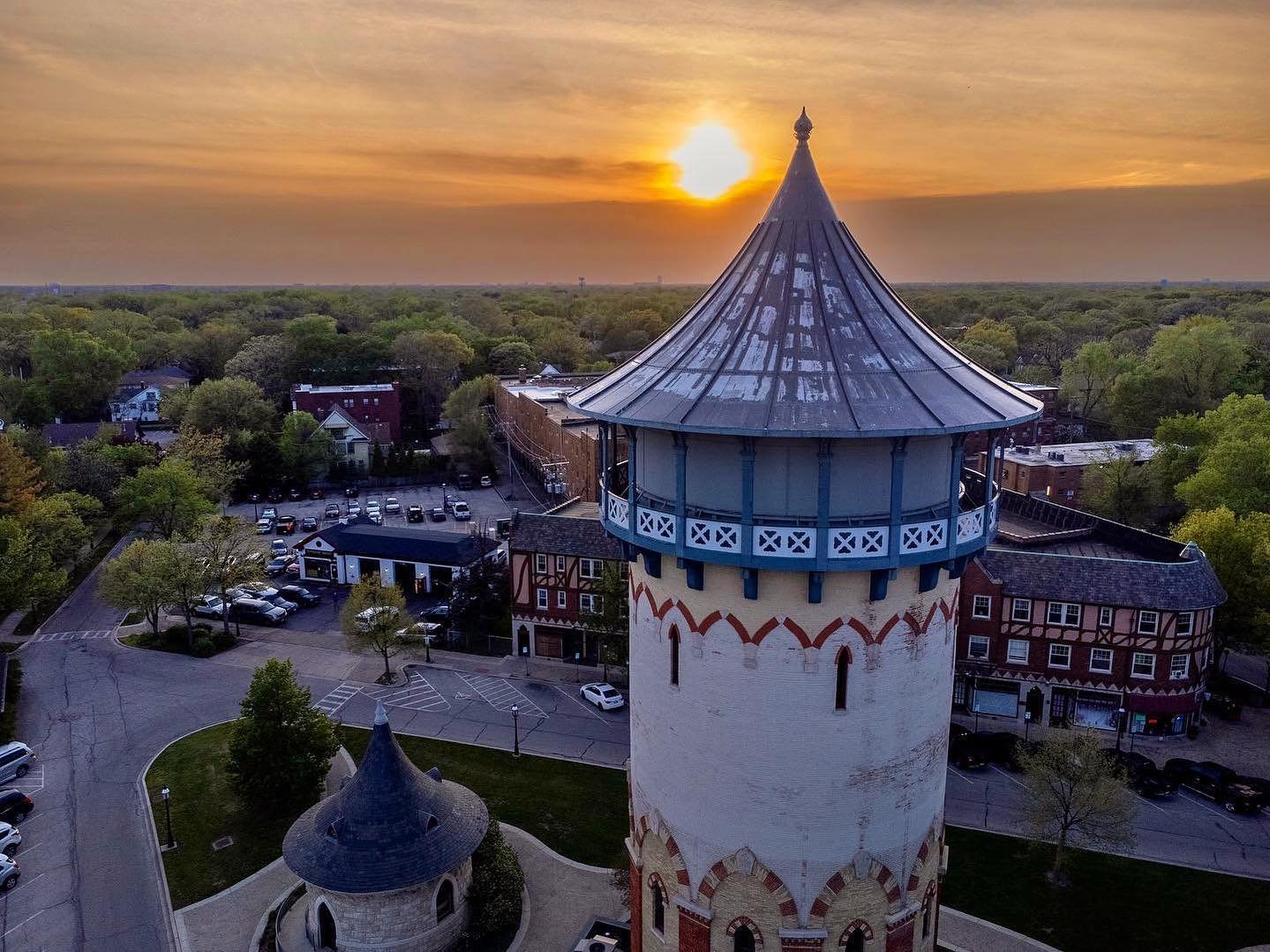
Downtown clusters along Burlington Street near the Metra station. The Arcade, a Gothic Revival building from 1879, anchors the block with patterned brickwork and pointed arches. It is on the National Register of Historic Places and widely recognized as America's first suburban shopping mall. It's still occupied and in use today. Around the corner stands the Victorian water tower, designed by William Le Baron Jenney, the same architect credited with inventing the steel-frame skyscraper. These are not restorations or replicas. They’re the originals.
Stay past sunset and you'll notice something else: It's dark. Noticeably darker than the surrounding suburbs, and intentionally so. Olmsted's original 1869 plan called for ornamental gas lampposts designed to cast a gentle glow rather than to flood the streets with light. That philosophy has held. Riverside is currently pursuing Dark Sky Certification, a formal designation that would recognize what residents have quietly protected for more than a century.
Residential streets beyond downtown offer more of the same layered history. Frank Lloyd Wright, Louis Sullivan, Joseph L. Silsbee, and William Drummond all designed homes here, and more than 80 structures across the village hold landmark status. No two blocks look the same. The experience of walking the neighborhood is genuinely different from anywhere else in the Chicago area.
Where to Stop and Sit Awhile
Olmsted designed Riverside for slowing down, sitting still, letting an afternoon unfold. Everything worth eating and drinking is within a two-minute walk of the train station, which makes it easy to arrive hungry and leave in no hurry.
Vinette
90 Bloomingbank Road, Riverside
Vinette is a boutique wine shop and tasting room inside the historic train station where you can pick up a bottle on the way home or sit down for a glass while you wait for the next train. Either way, you're doing it inside one of the original Jenney-designed buildings.
Quincy Street Distillery
39 East Quincy Street, Riverside
Quincy Street Distillery sits steps from the Metra station, and its history is baked into every bottle. Owner and distiller Derrick Mancini makes a gin modeled on the Prohibition-era "railroad gin" that moonshiners produced along these same tracks. The distillery also produces one of the only malt rye whiskeys in the country and a spirit made from honey and persimmon that may be unique in the world. Tours and tastings are available.
Dulce Mami Café
1 Riverside Road, Riverside
Dulce Mami Café occupies a corner of the Arcade, the 1879 Gothic Revival building that anchors downtown Riverside. The menu is Mexican-inspired breakfast and brunch with specialty lattes, boba, and aguas frescas to match.
La Barra
2 East Burlington Street, Riverside
La Barra is a local Italian restaurant in the center of town offering pasta, pizza, and appetizers made for sharing. It's the kind of neighborhood place that earns regulars quickly and handles a group well.
The Chew Chew
33 East Burlington Street, Riverside
The Chew Chew is an upscale, modern Americana restaurant built around seasonal, locally sourced ingredients. The menu shifts with what's available, which means it's worth a return visit.
Empanadus
7 East Burlington Street, Riverside
Empanadus does one thing and does it well: serves handmade empanadas with classic fillings as well as unexpected options such as vegan al pastor with pineapple. It's a good stop whether you're eating in or grabbing something to go.
La Estancia
25 Forest Avenue, Riverside
La Estancia is the local pick for classic Mexican, with a full menu and margaritas worth planning around. It has the comfortable, settled quality of a place that's been feeding the neighborhood for a long time.
Aunt Diana's Old Fashioned Fudge
29 East Burlington Street, Riverside
Aunt Diana's Old Fashioned Fudge has been making Riverside sweeter since 1976. Every Christmas, owner Kathleen Gits places a gigantic chocolate Santa in the storefront window—a tradition so well known that Michael Jackson once offered to buy it and have it shipped to California. She declined, citing concerns about the chocolate melting. The fudge is reason enough to stop in any time of year.
Sawmilly Sandwich Shoppe
35 East Burlington Street, Riverside
Sawmilly Sandwich Shoppe offers a wide range of handmade sandwiches and ice creams equally good for sitting down to enjoy or for savoring as you walk along the river.
Along the Des Plaines River
Olmsted devoted more than a third of Riverside's acreage to parks, commons, and other public green spaces, and the Des Plaines River, which runs through the village, is the quiet anchor of it all. That translates into miles of walking and biking trails along the riverbanks, spots that draw serious birders during migration season, and kayak launches for those who want to get on the water. The trail system connects to a broader network of Cook County forest preserves, so it's easy to extend a walk into a longer outing.
The parks scattered throughout the village (some large, some barely bigger than a front yard) are just as Olmsted planned them: accessible from every street, never more than a short walk from any front door.
The Living Village
When the weather turns warm, Riverside's farmers market sets up by the water tower on Wednesdays. Vendors bring produce, plants, handcrafted soaps and goods, and prepared food. It's the kind of market where you can pick up dinner ingredients as well as a snack for the walk home. Summer also brings concerts in Guthrie Park, movies in Big Ball Park, and nostalgic Fourth of July programming. A blanket and a picnic basket are the only equipment required.
Riverside Foods, the village's independent grocery on Burlington Street, is worth a stop for everyday staples and local specialty items. It's the kind of small-format market that makes living in a village without a car actually work.
Getting to Riverside
The Metra BNSF Railway line runs directly into Riverside from Chicago's Union Station in about 30 minutes, stopping steps from the historic train depot. By car, both I-290 and I-55 provide straightforward access from Chicago and the surrounding suburbs, with parking available near the village center and train station.
When planning a visit, it's worth building in more time than you think you'll need. Riverside has a way of slowing people down—which was, after all, the original idea.