What did Ernest Hemingway drink? Explore the cocktails, myths, and Oak Park roots behind the legendary writer’s thirst and timeless stories.
Hemingway, Oak Park, and a Famous Thirst
Oak Park has produced no shortage of creative minds and free spirits, but none loom quite as large as Ernest Hemingway, the village’s most famous literary export and perhaps its most complicated son. He grew up under the village’s sturdy elms, honed his writing skills at Oak Park and River Forest High School, and then went on to conquer the world one sentence—and one continent—at a time.
Of course, Hemingway’s reputation extends far beyond the typewriter. He was brilliant, bold, and endlessly restless, a man known as much for his precise prose as for his far-flung adventures and passion for a good pour. His life became, as he himself noted, a kind of “moveable feast,” from the cafés of Paris to the bullrings of Spain to the sun-drenched bars of Key West and Havana. He left behind stories that manage to smell faintly of tobacco, salt air, and espresso.
Although he is renowned for his prose, the stamps on his passport, and his bar tabs, in Oak Park we don’t view him as a cautionary tale or an icon. Instead we see him as one of our own: a hometown kid raised in a peaceful neighborhood whose wanderlust inspired him to become the writer we celebrate today.
What Did Ernest Hemingway Drink?
How much of the legend is just a legend? Below we explore the myth of the hard‑boozing “Papa” and take a look at the real cocktails, wines, and spirits he enjoyed and how they fit into his life rather than defining it.
Finally, we’ll point you toward bars and restaurants in Oak Park where you can sip Hemingway- inspired drinks today—ideally with more moderation, but in just as much style.
Beyond the Legend: His Actual Drinks
Once you strip away the legend, Hemingway’s drink order is surprisingly specific. Cocktail enthusiasts today still chase his favorite cocktail choices, especially the tart, no‑nonsense Hemingway Daiquiri and his famously strong, ultra‑dry martinis. He loved drinks that were heavier on the gin or rum than most people would tolerate, and he became closely linked to Cuba’s tart, not‑too‑sweet rum cocktails. Beyond these famous favorites, he also drank simple Scotch and soda, experimented with mighty concoctions like Death in the Afternoon, and favored tart interpretations of classics over sugary drinks with fruit and umbrella garnish, the kind you still see poured from a classic cocktail shaker into a frosty cocktail glass.
Rum, Sunshine, and the Daiquiri
The classic daiquiri was born in Cuba around the turn of the 20th century, with just three simple ingredients—white rum, fresh lime juice, and a touch of sugar—shaken with crushed ice into a crisp, refreshing drink that could cut through the island’s oppressive heat. Hemingway fell hard for Cuba in the 1930s and '40s, making Finca Vigía outside Havana his second home, where he would write by day and frequent local bars by night.
The Hemingway Daiquiri, also called the Papá Doble or Hemingway Special, is one of the most reliably documented cocktails he championed. At his favorite spot, El Floridita—often referred to simply as the Floridita bar—bartenders doubled the rum (he preferred white, often a Bacardi‑style rum) and along with lime juice added a big splash of fresh grapefruit juice and just a whisper of maraschino liqueur. With barely any sugar, the drink is brutally tart and potent: a strong, lip-puckering punch in the face that matched Hemingway’s taste for cold, bold, and unsweetened. If you’re mixing a Hemingway Daiquiri recipe at home, you’ll usually see white rum, fresh citrus, maraschino, a restrained touch of simple syrup, and maybe a lime wheel riding the rim of the glass.
The Driest of Dry Martinis
Hemingway didn’t mess around with his martinis—he demanded them bone-dry and brutally strong, with gin chilled to the point of frostbite. For many fans, this ultra‑dry martini has become his other favorite drink, a true classic cocktail that rewards precise ratios and icy cold technique. No olive-loaded spears, lemon twists, or fussy garnishes for him; just the bare essentials in a no-nonsense glass. It mirrored the man himself: spare prose stripped of fluff. Like his sentences, this drink wastes no words and delivers pure, unflinching impact with every sip.
Death in the Afternoon (Absinthe + Champagne)
Death in the Afternoon is the bracing two-ingredient cocktail credited to Ernest Hemingway, and published under his name in the 1935 celebrity bartender's guide, So Red the Nose, or Breath in the Afternoon. His instructions? "Pour one jigger of absinthe into a Champagne glass. Add iced Champagne until it attains the proper opalescent milkiness. Drink three to five of these slowly."
More a dare than a daily sip, this high-octane bomb references the revival of absinthe in 1920s–’30s Paris. Known as the Green Fairy due to its natural, vibrant green hue and its reputation for inducing hallucinogenic experiences, absinthe was the preferred drink of artists and intellectuals, becoming a symbol of bohemian life and creative expression.
The Mojito Myth
Many bars—from Havana to your neighborhood spot—love to claim the mojito as Hemingway’s ultimate favorite, often slapping his name on the menu and pointing to the scrawled “My Mojito” signature on the wall of Havana’s La Bodeguita del Medio as gospel. It’s the tale of a great rum-soaked romance, but historians and cocktail writers call B.S. There’s no hard evidence he ever set foot in La Bodeguita—the bar wasn't prominent during his Cuba years—and the taste wouldn't align with his tart, no-sugar, no-nonsense palate. Sorry, Instagram influencers: His letters, books, and bar tabs point squarely to daiquiris, bone-dry martinis, and highballs. Those are the drinks that show up again and again in guides like the To Have and Have Another, a Hemingway cocktail compilation that tracks what he actually drank and where.
Rum Highballs and Simple Scotch and Soda
Beyond flashy cocktails, Hemingway craved simpler, everyday pours that fueled long writing days—nothing fussy, just cold, fizzy, and refreshing. Rum highballs were a staple: white or aged rum over ice with soda water, or punched up with ginger beer or ale for a bite. Scotch and soda was his trusty daily driver, a simple, easy sip that let him write all day without losing his edge at the typewriter.
How to Drink Like Hemingway (Responsibly) in Oak Park & Beyond
These unpretentious drinks, strong and reliable, are easy to order at any decent bar today, whether you're channeling Papa or just winding down Oak Park style.
Hemingway Daiquiri at Citrine Café
Order the Hemingway Daiquiri at Citrine Café (100 South Oak Park Avenue, Oak Park, IL), a perfect blend of rum, maraschino liqueur, lime, grapefruit, and a hint of demerara for subtle balance. This polished neighborhood spot in Oak Park’s Hemingway District hums with bright, modern warmth—perfect for dates or small group gatherings. Its thoughtful cocktail list and comfy bar make it ideal for channeling literary vibes without pretension. Ask for the Hemingway Daiquiri by name; it’s a crisp, spirit-forward shaken classic, not a sweet, frozen slush bomb.
Dry Martini at Little Gem
The Little Gem Cafe (189 North Marion Street, Oak Park, IL) nails the Hemingway martini with its classic, old-school bar program: strong, precise pours in a timeless nook of low lighting, leather stools, and polished wood. This intimate downtown space attracts neighbors, date-night couples, and after-work crowds. Order a very dry gin (or, if you prefer, vodka) martini, up, with a twist or an olive. Feeling bold? Try the creative martini variations and extensive spirit selection. If Hemingway lived in Oak Park today, this would undoubtedly be his favorite spot.
Nod to Death in the Afternoon at Hemmingway’s Bistro
Absinthe has been legal in the U.S. since 2007 (with low levels of thujone only and no psychedelic labels allowed), although few neighborhood bars stock it. Spot it on a menu? Give Death in the Afternoon a try; otherwise, head to Hemmingway’s Bistro (211 North Oak Park Avenue, Oak Park, IL) for an extensive selection of bubbles. This cozy, French-inspired hideaway celebrates two of Hemingway’s passions: food and adventure. During Sunday jazz brunch, enjoy live music paired with your bubbly, a truly enchanting experience that Hemingway himself would have adored. Raise a flute in honor of Papa and soak in the atmosphere.
Rum Highballs and Scotch and Soda at Kettlestrings Tavern
Kettlestrings Tavern (800 South Oak Park Avenue, Oak Park, IL) delivers unfussy Hemingway-style drinks in a neighborhood bar—laid-back yet drink-serious, with a chef-driven menu and a lively counter for groups or dates. Go for a rum highball (top-shelf rum, soda or ginger ale, tall over ice) or a classic Scotch and soda. Or, you can try their Hemingway Cooler, with gin, soda, and lime. This spot in the Pleasant District, perfect for long chats late into the evening, matches his everyday, easygoing style. It's the perfect ending to a self-guided "Hemingway drinks" tour in Oak Park.
Hemingway, Drinking, and Oak Park Today
Hemingway’s legendary thirst was real, but it was tangled tightly with mental health struggles, family tragedies, and a turbulent life that ended too soon. This isn’t about glorifying excess or matching his intake. It’s about savoring well-crafted cocktails, Oak Park’s warm hospitality, and the simple joy of a good drink in good company. If you want to start your day in true Hemingway fashion, you can always begin by soaking up the history at the Hemingway Birthplace Museum before you order your first cocktail. Pair your sips with a stop at the Oak Park Public Library’s Hemingway collection or a reflective tour of his birthplace on Oak Park Avenue.
Cheers, Papa-style (but responsibly)!
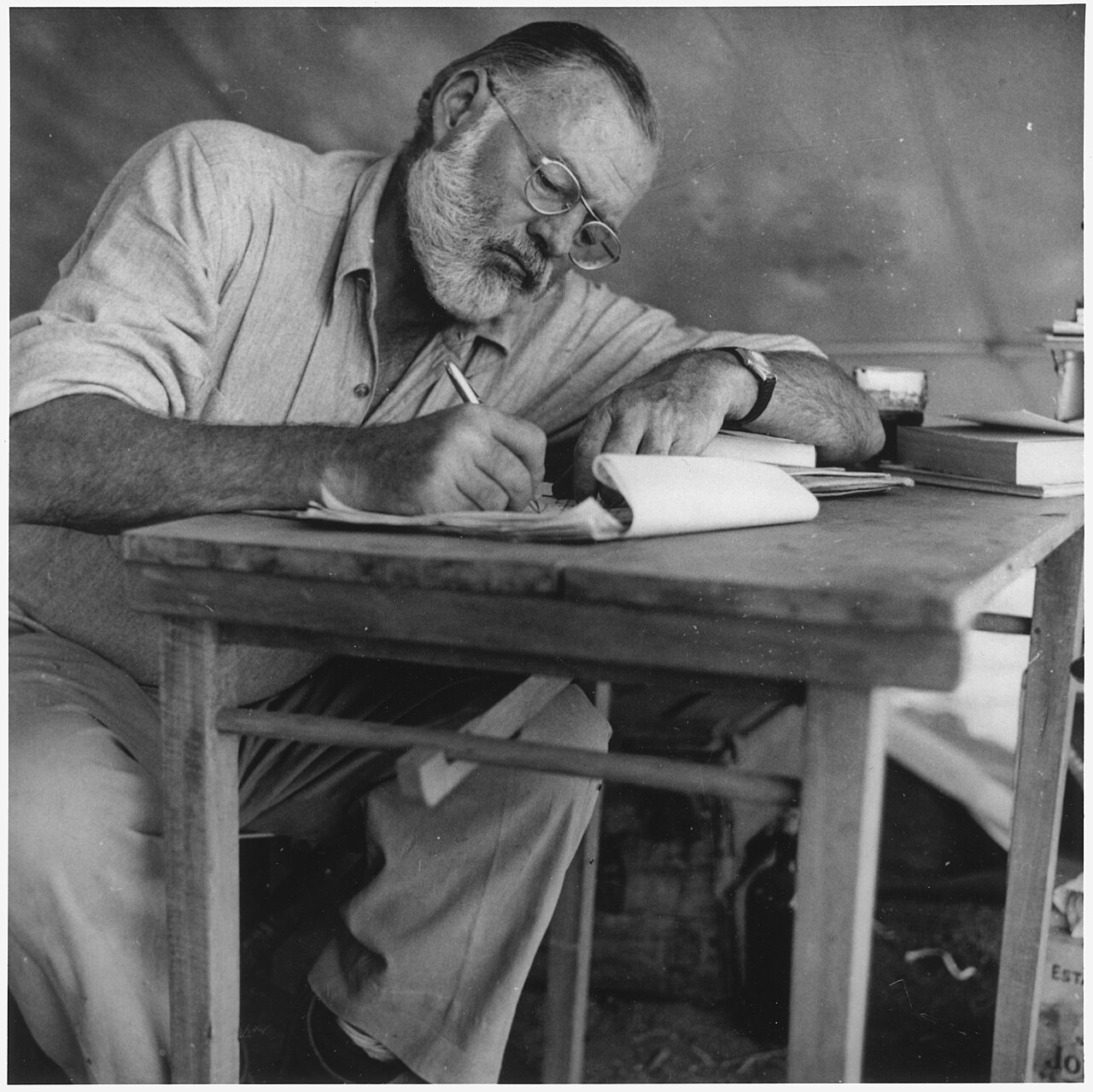
*Cover Photo: Ernest Hemingway writing at a campsite in Kenya, circa 1953. U.S. National Archives, public domain, via Wikimedia Commons.