
Just 12 miles west of downtown Chicago, the Village of Riverside, Illinois, is where modern American suburbia first took shape on paper—and then in parkland, roadways, and curving streets that still feel remarkably fresh today. Conceived in the late 19th century by Frederick Law Olmsted and Calvert Vaux, the same landscape architects who designed Central Park in New York City, Riverside is widely recognized as one of the earliest and most influential planned communities in the United States. Designated a National Historic Landmark in 1970, it remains the clearest place to see Olmsted’s vision for a suburban community where nature, architecture, and daily life are woven together.
How Riverside Became one of the First Planned Suburbs
The farmland and woods along the Des Plaines River west of downtown Chicago began to attract attention from investors in the 1860s. The new rail line connecting Chicago to points west made it possible for professionals to live outside the city and commute in, something that felt revolutionary at the time.
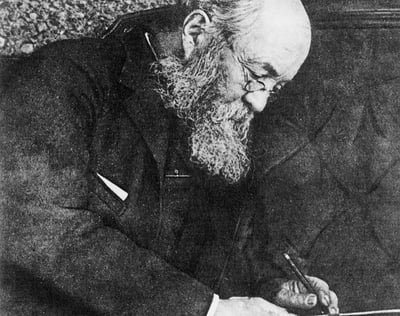
In 1869, the Riverside Improvement Company purchased a large tract known as Riverside Farm and hired Frederick Law Olmsted and Calvert Vaux to create what the company described as “a perfect village in a perfect setting.” Working together as Olmsted, Vaux & Co., the partners produced the general plan for Riverside, laying out its curving streets, parkways, and parkland as a single, integrated landscape. Olmsted was already gaining a national reputation for landscape architecture thanks to projects like Central Park and Brooklyn’s Prospect Park, and Riverside offered him a new kind of canvas: Instead of a park inside a city, he was asked to design a suburban community from the ground up.
 Olmsted’s plan did three radical things for the 19th century:
-
It rejected the rigid city grid in favor of curving streets that followed the river and the land’s natural contours.
-
It devoted a large share of the acreage to parkland, commons, and parkways, ensuring that greenery was never far from any front door.
-
It incorporated generous setbacks and wide lots, so private yards and public greenways blended into a continuous landscape.
This Olmsted design became a template for future suburbs, but Riverside was the first place it was fully realized.
Olmsted’s Plan: Curving Streets, Parkways, and Green Space
Walking through Riverside today, you can still feel Olmsted’s plan at work. Instead of numbered blocks and sharp corners, the streets bend gently and meet at odd angles, creating small triangular islands of grass and trees. These tiny parks, combined with larger open spaces, make Riverside feel like one sustained garden.
Key features of the original landscape design include:
-
Curving streets and set back homes. Roads follow the river valley’s natural shapes, and houses sit well back from the curb. Such setbacks create deep front lawns, long sight lines, and a feeling that buildings are nestled into the landscape rather than competing with it.
-
Parkways and parkland. Broad tree‑lined parkways connect larger parks and the riverfront, while smaller triangular parks sit at intersections. Olmsted and Vaux devoted substantial acreage to shared green space, insisting that access to nature should be part of everyday life.
-
Streetlights and modern conveniences. Even in the 19th century, the designers understood that a beautiful suburb still needed to function. Riverside’s signature gas streetlights were part of the original plan, and later updates kept the village wired for modern conveniences, while preserving the historic look.
Locals often describe Riverside as feeling quietly lush—you’re never far from greenery, but you can still catch a train into the city or drive into Chicago on I‑290 in under an hour.
Architecture in a Living Landscape
Olmsted approached Riverside primarily as a landscape architect, but the village quickly attracted building designers who were just as forward‑thinking. The result is an open‑air museum of American landscape and architectural history intertwined.
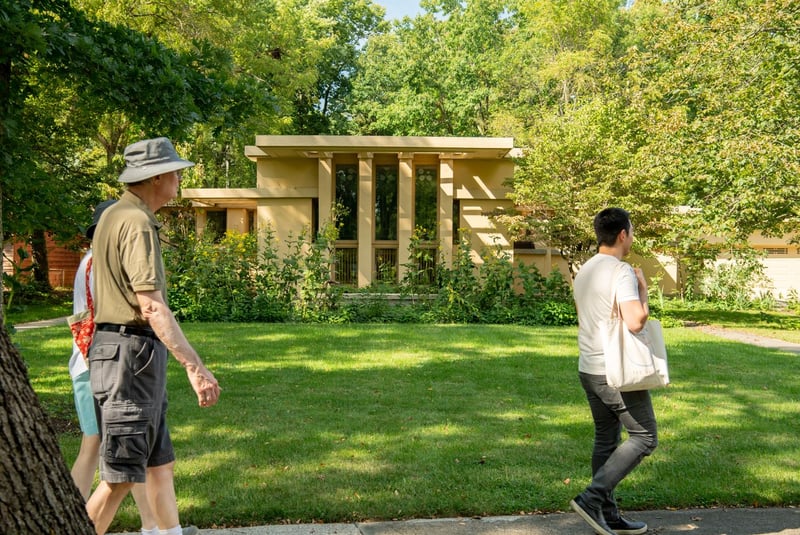
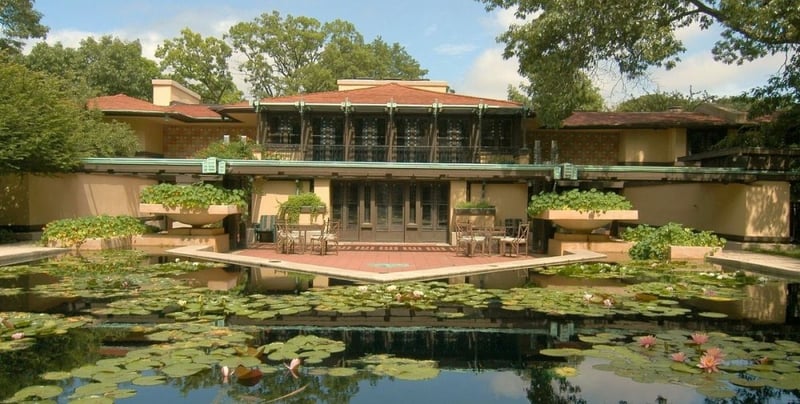
Notable figures associated with Riverside include William Le Baron Jenney, often called the father of the skyscraper, who designed the village’s early water tower and depot; Frederick Clarke Withers, whose Arcade Building is a downtown landmark; Frank Lloyd Wright, whose Avery Coonley House and other commissions showcase early Prairie School design; and Louis Sullivan, the influential Chicago architect whose residential designs reflected the organic sensibilities of his larger work.
Together with architects like Joseph L. Silsbee, William Drummond, and R. Harold Zook, they translated Olmsted’s vision into more than 80 landmark structures across styles ranging from Italianate and Victorian to Prairie and Mid‑Century Modern.
Architectural Gems You Can See Today
A single visit to Riverside offers a cross‑section of nearly a century of design layered into one cohesive place. As you explore, look for:
-
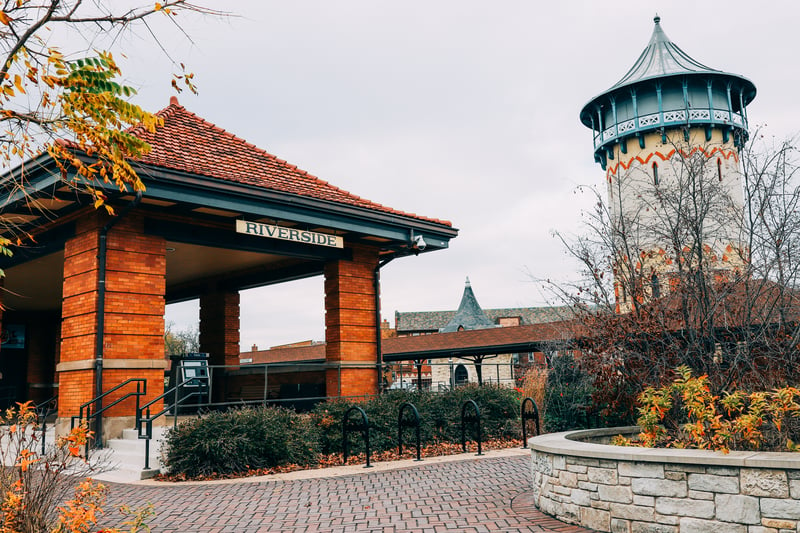
The Victorian Gothic Riverside Water Tower, designed by William Le Baron Jenney, which once housed the village’s waterworks and now serves as a symbol of the town.
-
The Arcade Building by Frederick Clarke Withers, with its patterned brickwork and pointed arches anchoring Riverside’s compact downtown.
-
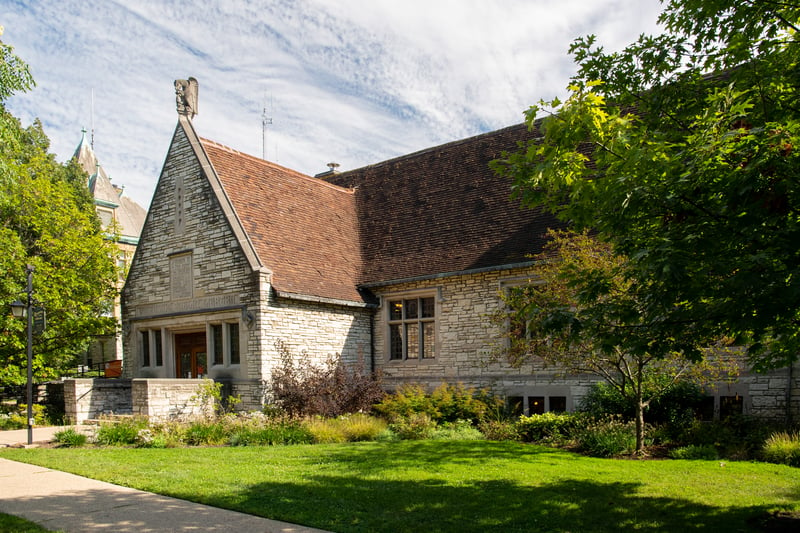
The Riverside Public Library, a Tudor Revival landmark that overlooks the river and parks, complete with stone details, leaded glass, and a setting that feels straight out of a storybook.
-
The Riverside Train Station, where Olmsted’s curving roadways and parkways converge at the rail line, making it easy to picture 19th-century commuters heading into Chicago.
-
Key Frank Lloyd Wright homes, including the Avery Coonley House and other Prairie designs that echo Olmsted’s horizontal lines and love of natural materials.
Many of these structures are concentrated near the village center and along the Des Plaines River, which means you can see multiple eras of architecture within a short, walkable loop.
Walking Tours and Other Ways to Experience Olmsted’s Legacy
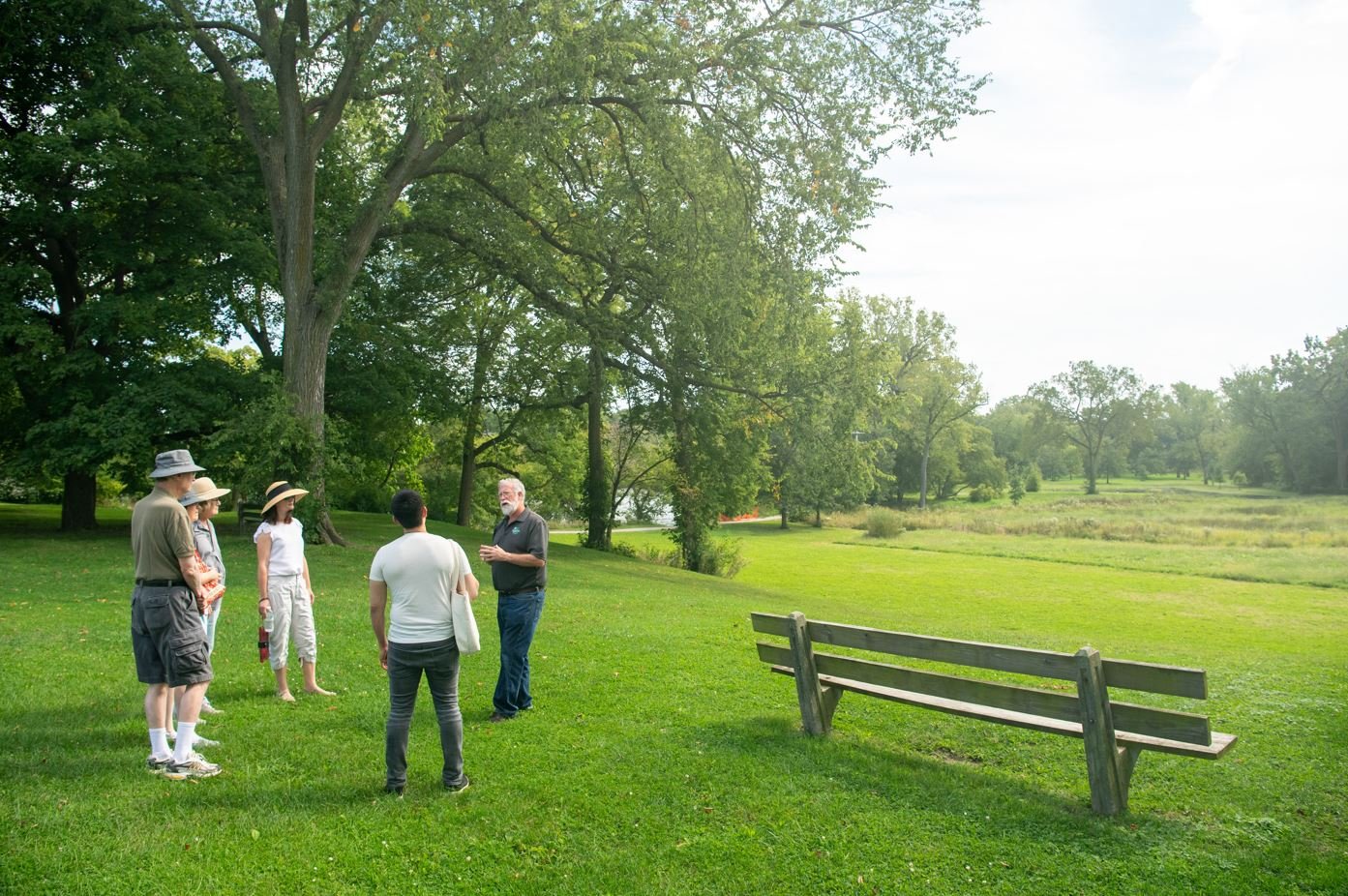
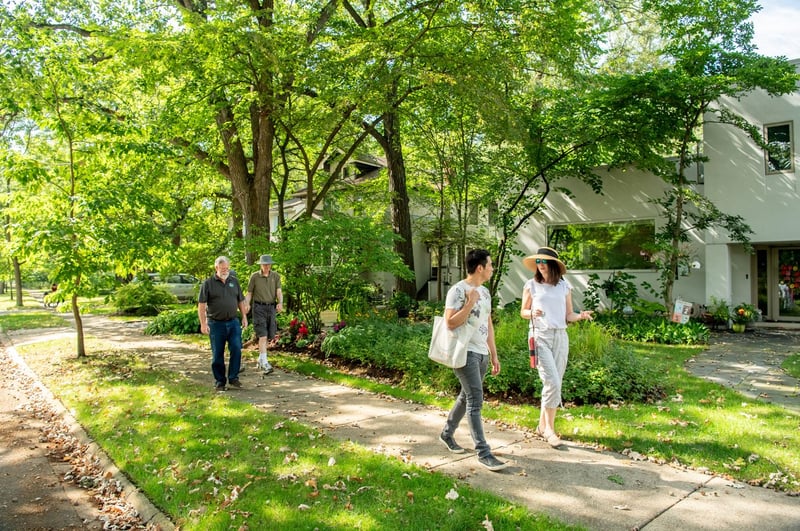
The most rewarding way to understand Olmsted’s legacy in Riverside is to experience it at street level. Instead of driving quickly through the village, plan to spend a few hours on foot.
-
Guided walking tours: The Frederick Law Olmsted Society of Riverside regularly offers walking tours that explore different parts of the village. Some focus on Olmsted’s landscape architecture, while others highlight particular neighborhoods or architectural styles. Guides are often longtime residents who point out subtle design choices you might miss on your own.
-
Self‑guided routes: The village and local organizations provide maps and online resources so that visitors can follow themed routes past key homes, the water tower, the Riverside Public Library, and other landmarks.
-
Seasonal visits: In spring and summer, the greenery around the river and parks is at its fullest. In fall, the curving streets and parkways become natural leaf‑peeping routes. Winter visits reveal more of the underlying geometry of Olmsted’s plan, when tree branches are bare and sight lines are longest.
Regulars tend to park near the village center, grab coffee or lunch, and then set out on foot, looping back through the same few blocks at different times of day to see how the light changes the views.
Riverside as a Model for Planned Communities
Riverside was one of the first places in America where a landscape architect applied large‑scale planning ideas to a residential suburban community. Instead of dropping houses into an existing grid, Olmsted and Vaux shaped land, roadways, and parkland together, then invited architecture to follow.
This approach influenced countless later developments:
-
It showed how curving streets and irregular blocks could create both variety and coherence.
-
It made space for shared recreational activities—walking, picnicking, boating, and later, biking—without separating them from everyday life.
-
It demonstrated that beauty and practicality could coexist: train access to downtown Chicago, respectable commute times, and modern conveniences alongside tree‑lined streets and open vistas.
Planners and students of landscape architecture still visit Riverside as a National Historic Landmark example of how a suburb can feel both carefully designed and naturally evolved.
Riverside in the Context of Olmsted’s Broader Work
If you’ve walked through Central Park in New York City, Boston’s Emerald Necklace, parts of Buffalo’s park system, or college campuses designed with Olmsted’s input, you’ll recognize familiar themes: long, unfolding views, layered plantings that frame water and meadows, and a belief that everyday contact with nature improves public health and community life.
Riverside is unusual because those ideas are applied to an entire village, not just a single national historic site or park. Here, the park is the town itself, and streets, homes, public buildings, and green spaces are all parts of a single composition.
For visitors who already appreciate Olmsted’s role in shaping the American landscape, Riverside feels like discovering an early sketch that became a proof of concept.
What to Do During a Day in Riverside
To make the most of your visit, think of Riverside as a place to both learn and linger.
Suggested approach:
-
Start near the train station or water tower. This area offers immediate access to Olmsted’s parkways, early civic buildings, and the compact downtown.
-
Take a walking tour or follow a map. Use resources from the Frederick Law Olmsted Society of Riverside to guide your route. Prioritize streets that curve along the Des Plaines River and blocks with multiple landmark homes.
-
Build in time for pauses. Sit on a bench by the river, in a small triangular park, or outside the Riverside Public Library and watch how people use the space: dog walkers, kids on bikes, commuters heading to the train.
-
Add food and culture. Nearby restaurants, cafés, and spots like Riverside Arts Center and Higgins Glass Studio connect the historical village to a contemporary creative scene. You’ll see how Olmsted’s 19th‑century ideas still shape how people eat, shop, and gather.
Many visitors find that a single day in Riverside changes how they see other neighborhoods back home. After you’ve walked a village where landscape design was treated as seriously as architecture, it’s hard not to notice where that balance is missing.
Planning Your Visit
Riverside sits in Chicago’s near west suburbs, easily reached by car or Metra. The BNSF Railway line links the Village of Riverside to the city in about a half-hour, making it an easy day trip for anyone staying in Chicago. If you’re driving, major routes like I‑55 and I‑290 connect directly to local roads that lead into the village center.
Before you go:
- Check the village website for current information on walking tours, special events, and seasonal programming.
- Review parking guidance near the train station, parkways, and downtown streets.
- Consider pairing your visit with other recreational activities in the region—nearby forest preserves, bike trails, or architecture tours in Chicago—to get a fuller picture of how this small suburb fits into the wider regional story.
Visiting Riverside, Illinois, is one of the most direct ways to understand how Frederick Law Olmsted and his collaborators reshaped the idea of what a neighborhood could be. Here, Olmsted’s vision is not just something you read about in a book; it’s the curve of a street, the shade of a parkway tree, the glow of a historic streetlight, and the way a village still orients itself around its river and green spaces more than 150 years later.