

Some weekends are made for slowing down; others are made for stepping inside a genius’s sketchbook. A Frank Lloyd Wright weekend in Oak Park lets you do a little of both, on streets that still feel like a neighborhood. This is the village where Wright lived and quietly reinvented American residential architecture, on tree‑lined blocks that locals still walk every day.
Because Oak Park has more than 20 Wright‑designed buildings in a compact, walkable area, it’s an easy place to sink into his work without ever getting in a car. Add in nearby River Forest and Riverside—both hiding some of his most important early and Prairie‑style homes—and suddenly the near west suburbs become the perfect home base for a full Wright weekend. Think of this itinerary as your blueprint for two days of Wright immersion, including guided tours, slow walks, good coffee, and plenty of time to look up and notice the details.
Day One Morning: Start at the Home and Studio
Tour the Frank Lloyd Wright Home and Studio
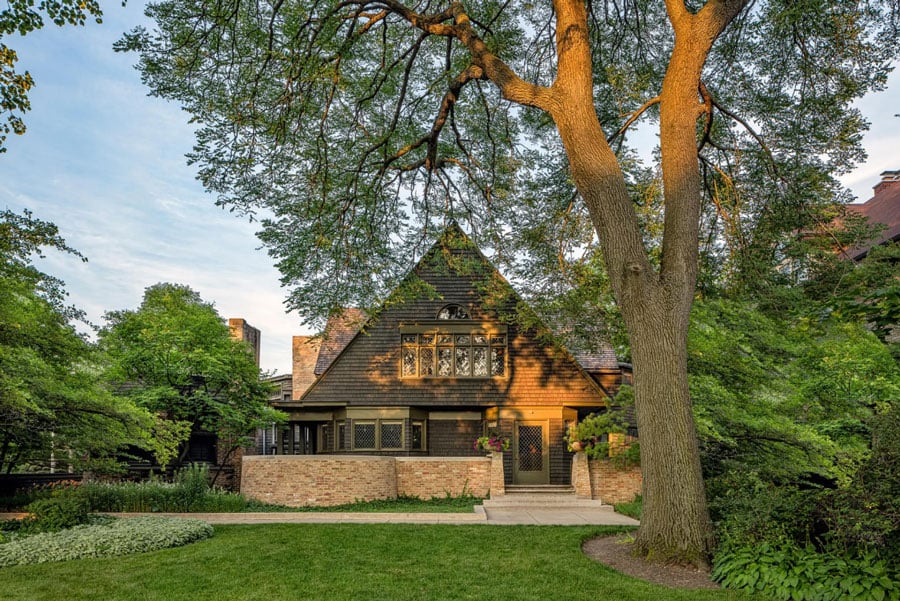
Every good Wright weekend starts at the source. On a quiet corner of Chicago Avenue and Forest Avenue, the Frank Lloyd Wright Home and Studio marks the spot where he lived with his young family and developed the ideas that would become the Prairie School. It’s also the first building he fully controlled, so it’s the best place to see how his thinking came together.
Because tours are guided only, it’s worth booking ahead through the Frank Lloyd Wright Trust and aiming for a morning time slot. Once you step inside, you’ll move from intimate family spaces into the dramatic studio, where the ceiling soars and light pours in from unexpected angles. As you walk, keep an eye out for early experiments that will pop up again across the weekend, such as geometric art glass and built‑in seating and storage.
Stroll the Surrounding Blocks: Forest and Chicago Avenues
When you step back outside, you’ll be standing in one of the densest clusters of Wright homes anywhere. A short self‑guided loop along Forest Avenue and Chicago Avenue lets you see multiple houses within just a few blocks.
You’ll spot touchstones such as Heurtley House and several other early residences that show Wright moving toward the low, horizontal Prairie style. From the sidewalk, notice the strong rooflines, broad overhangs, bands of windows, and porches that feel like a soft step between indoors and out.
Coffee or Brunch Near the Home and Studio
Once you’ve circled the block (or two), it’s time to sit down and warm up. Oak Park has several cafés and lunch spots within a short walk or quick drive of the Home and Studio, so you can grab coffee and scroll through the photos you just took.
This is also a good moment to sketch out your afternoon. Do you want to add Unity Temple to the day, map out an extended walking route, or keep things loose and let the neighborhood guide you? A relaxed brunch gives you space to decide.
Day One Afternoon: Oak Park’s Prairie School Showcase
Next Up: Unity Temple
If you have room in your schedule, Unity Temple is the next logical chapter in your Wright story. Designed for a Unitarian congregation, this concrete landmark is one of his most important public buildings, and it looks like absolutely nothing else on the block.
Inside, the sanctuary feels like a carefully composed lantern. Light filters down through geometric skylights, while warm bands of wood wrap the room. It’s a master class in how to create a spiritual atmosphere without traditional stained glass or towering stone vaults. Whenever possible, book ahead and give yourself time to simply sit and look up; the longer you stay, the more details you’ll notice.
A Self‑Guided Residential Walk
Whether or not you visit Unity Temple, an extended walking tour through Oak Park’s residential streets is a must. Various maps and apps can help you trace a route past a cluster of Wright homes, but what matters most is slowing down enough to really look.
As you wander, watch for low horizontal lines that seem to anchor the houses to their lots, deep roof overhangs that create shade and shelter, and art-glass windows that catch the light in subtle ways. The wide porches and terraces pull life outside, while carefully proportioned facades hint at flowing interiors within. Many of these homes are key early experiments in form and materials, so you’ll see moments where Wright is clearly trying something new. Because you’re on foot, you can always circle a block or double back whenever a detail catches your eye.
Late Afternoon in Downtown Oak Park
After a few hours of house‑spotting, head back toward downtown Oak Park. Here, the focus shifts from facades to street life. You can browse bookstores and boutiques, or simply sit at a sidewalk table and watch the village move around you.
Staying overnight in Oak Park keeps everything easy, as you’re close to restaurants and the train, and you’re only a few minutes’ drive from the neighborhoods you’ll explore on day two.
Day Two Morning: River Forest’s Early Landmarks
A Short Hop to River Forest
Day two starts with a brief move next door. River Forest is Oak Park’s quieter neighbor, but behind those trees are some of Wright’s most important early works. The slower pace is perfect for a more reflective walk.
Because it’s only a short drive or rideshare from Oak Park, you can be parked and strolling by midmorning, coffee in hand.
Winslow House and Friends (From the Sidewalk)
The headliner here is the William Winslow House, one of Wright’s first major commissions as an independent architect and a clear turning point in his career. From the sidewalk, you’ll see a powerful, symmetrical facade, intricate brickwork, and a hint of the horizontal emphasis he’d later push much further.
Like many other Wright homes in River Forest, Winslow House is a private residence, so the rule is to admire from the public way and give residents space. A thoughtful walking route can also bring you past other Wright-designed residences in town, including the Isabel Roberts House.
Altogether, this part of the weekend feels more contemplative, as there are fewer formal tours and more strolls at your own pace past houses that quietly changed the course of residential design.
Coffee or Brunch Before You Head to Riverside
Once you’ve had your fill of River Forest’s calm, it’s a great time to refuel. Grab coffee or brunch either in River Forest or back in Oak Park before shifting gears to Riverside, where the scale gets bigger and the landscape steps into a starring role.
Day Two Afternoon: Riverside’s Riverfront Prairie Estates
Arrive in Riverside: Curves, Trees, and History
Riverside is a planned suburb with deep roots. Laid out in the 19th century by Frederick Law Olmsted and Calvert Vaux, it’s known for curving streets and a lush, park-like feel. Into that graceful framework, Wright later inserted some of his most striking Prairie‑style work.
As you drive or walk into town, you’ll feel the difference immediately. The grid softens into bends, and the whole place feels more like a storybook than a traditional neighborhood.
The Avery Coonley House
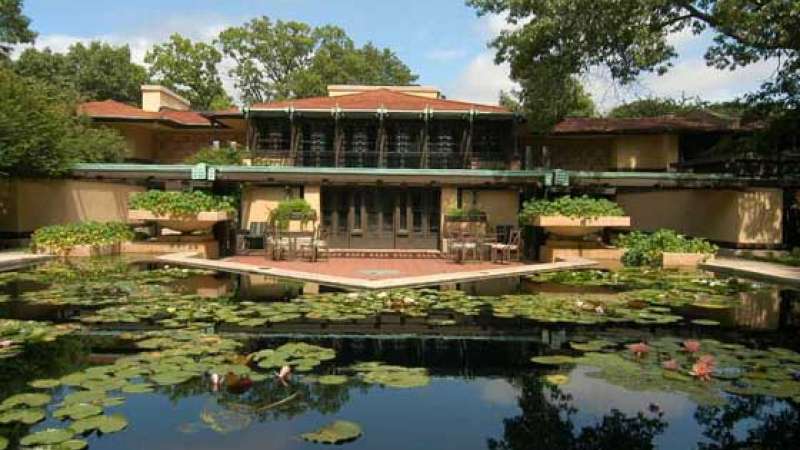
The Avery Coonley House, often called the Coonley Estate, is Riverside’s showpiece and one of Wright’s largest Prairie complexes. Set on a peninsula along the Des Plaines River, it’s a composition of interconnected buildings and gardens that blurs the line between house and landscape.
From public streets or nearby paths, you can appreciate the bands of windows and the sense that the building is reaching out to meet the river. It’s a National Historic Landmark and a key anchor of the Riverside Historic District, but it’s also very much someone’s home. That means the same rules apply here: Enjoy the view and resist the urge to wander up the driveway.
Tomek House and Other Riverside Highlights
Riverside has more than one Wright gem. The Frederick F. Tomek House, another nationally recognized Prairie‑style home, shows a more compact but no less thoughtful side of his work. There are also related structures like the Coonley Playhouse that round out the story of how Wright worked with families and landscapes over time.
It’s easy to pair your architecture time with a walk along the river or through Riverside’s historic core. The combination of river bends, mature trees, and carefully placed houses makes it clear why so many people consider this one of the most beautiful planned communities in the region.
Late Afternoon: Architecture Meets Small‑Town Charm
After a few hours outdoors, duck into a Riversidecafé or bakery for a snack and a drink. This is your chance to scroll through two days’ worth of photos and notice how different each place feels: Oak Park’s dense cluster of houses and public buildings, River Forest’s quiet tree‑lined streets, and Riverside’s sweeping riverfront estates.
Extend Your Tour into Chicago
If your Wright weekend has room to stretch, it’s easy to add one or two Chicago landmarks to the mix. Head into Hyde Park to tour the Frederick C. Robie House, a UNESCO-listed Prairie masterpiece on the University of Chicago campus that’s open for guided tours on most days.
Farther north, the intimate Emil Bach House in Rogers Park offers a more compact late-Prairie design, while downtown’s Rookery Building showcases Wright’s dramatic 1905 remodel of a historic light court in the heart of the Loop. With Oak Park as your home base, you can treat these Chicago stops as bonus chapters that round out your picture of Wright’s work across the region.
Practical Tips for Your Wright Weekend
Tickets and Timing
To keep things smooth, reserve guided tours for the Frank Lloyd Wright Home and Studio, and Unity Temple if it’s on your list, before you arrive. Those tours can sell out, especially on weekends and during peak seasons. Starting Day One with an early Home and Studio tour gives you the rest of the day for walking, photos, and a relaxed lunch.
Getting Around
Once you’re near the Home and Studio, Oak Park is highly walkable. Many Wright homes cluster close enough to connect into one or two leisurely strolls. River Forest and Riverside, by contrast, work best as short drives or rideshare trips. In all three places, comfortable shoes are a must. You’ll be on your feet a lot, sometimes pausing in place while you study a facade or frame the perfect shot.
Respecting Private Homes
Because many Wright buildings in Oak Park, River Forest, and Riverside are private residences, a little etiquette goes a long way. Enjoy them from the sidewalk, avoid stepping onto lawns, and keep driveways clear. Skip the close‑up window shots, and let your camera’s zoom do the work when you want more detail.
Make It Your Own
The beauty of a Frank Lloyd Wright weekend in Oak Park is that you can dial it up or down based on how deep you want to go. Architecture enthusiasts can add extra Oak Park houses, spend more time inside Unity Temple, or join a specialized tour that dives into design details and history. However, casual Wright fans (if they exist!) might keep things simpler, with a relaxed neighborhood walk and just a single side trip—to either River Forest or Riverside—before heading back to Oak Park for dinner.
While you’re here, it’s easy to fold in more of what makes the near west suburbs special, such as a visit to the Ernest Hemingway Birthplace Museum, stops at shops and galleries, or a long meal at a neighborhood restaurant where you can trade favorite Wright moments from the day. However you structure it, a Wright‑focused weekend in Oak Park, River Forest, and Riverside is all about giving yourself time to slow down and see how these buildings live, one carefully framed window at a time.