
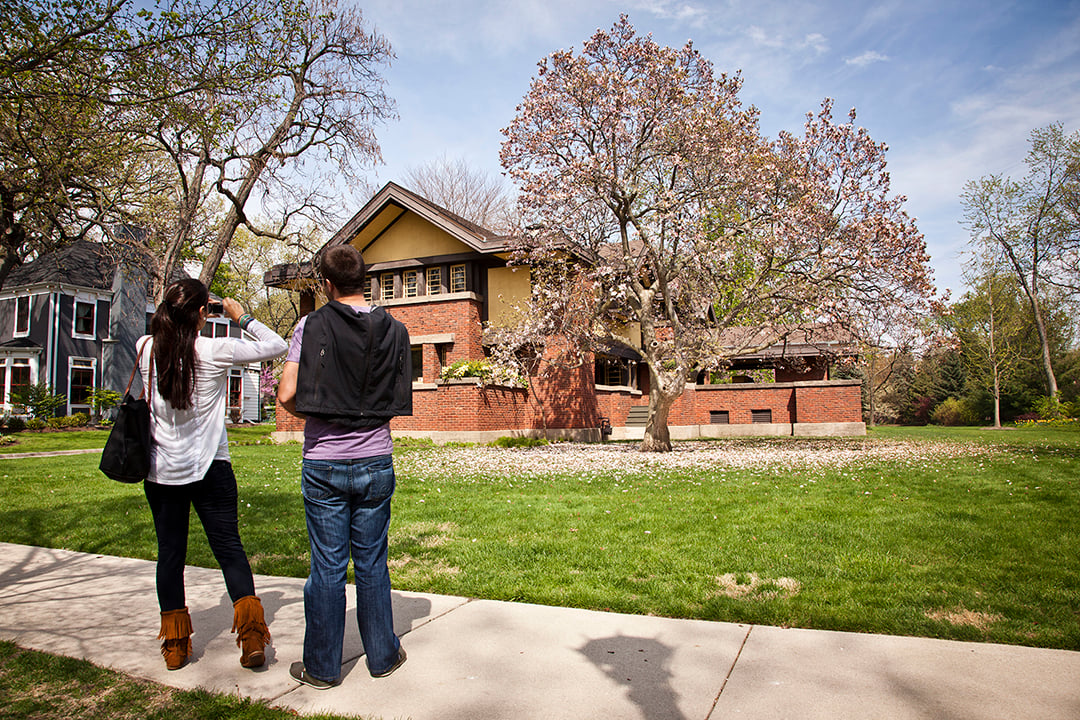
Just ten miles from downtown Chicago’s skyscrapers, the near western suburbs feel like an open‑air gallery of Chicago architecture, where almost every block offers a new lesson in design. Travelers come from around the world to see Chicago’s skyline and marquee buildings, but some of the most surprising architecture stories play out quietly in Oak Park and its neighboring towns. From storybook Victorian homes to crisp Prairie‑style facades with clean lines, these single-family homes show how generations of homeowners have shaped their living space in Oak Park and the surrounding towns. Together, the near west suburbs create the perfect field guide to major architectural style highlights and fuel real estate daydreams in Illinois.
Chicago Bungalow
What Is a Chicago Bungalow?
The Chicago bungalow is the middle-class classic. It’s typically one-and-a-half stories with brick construction and a low-pitched roof. In most cases, the front facade features generous bay windows alongside the strong roofline. Decorative details give each house its own personality. For example, stained glass is common, and some homes also feature stone bands or patterned brick. Because of this, entire blocks can feel unified while still showing subtle variations from house to house.
Floor Plans and Living Space
Inside the bungalow, floor plans tend to be long and efficient, with the main rooms flowing sequentially from front to back. The living room usually sits near the front of the house, followed by the dining room and then the kitchen. In many homes, bedrooms line one side of the floor plan, while a full basement and an unfinished attic provide extra living space or storage. Because these homes were built for Chicago’s growing middle class in the early 20th century, even relatively modest examples often showcase impressive craftsmanship, especially in the wood trim and built-in features.
Where to Spot Them in the Near West Suburbs
On residential streets in Brookfield and Forest Park, you’ll find one classic Chicago bungalow after another. As you walk a bungalow-heavy block, notice how the same basic roofline and floor plan repeat from house to house. At the same time, small differences begin to appear, whether it’s the shape of the bay windows or the subtle details along the facade.
Prairie‑Style Homes
Key Prairie‑Style Features
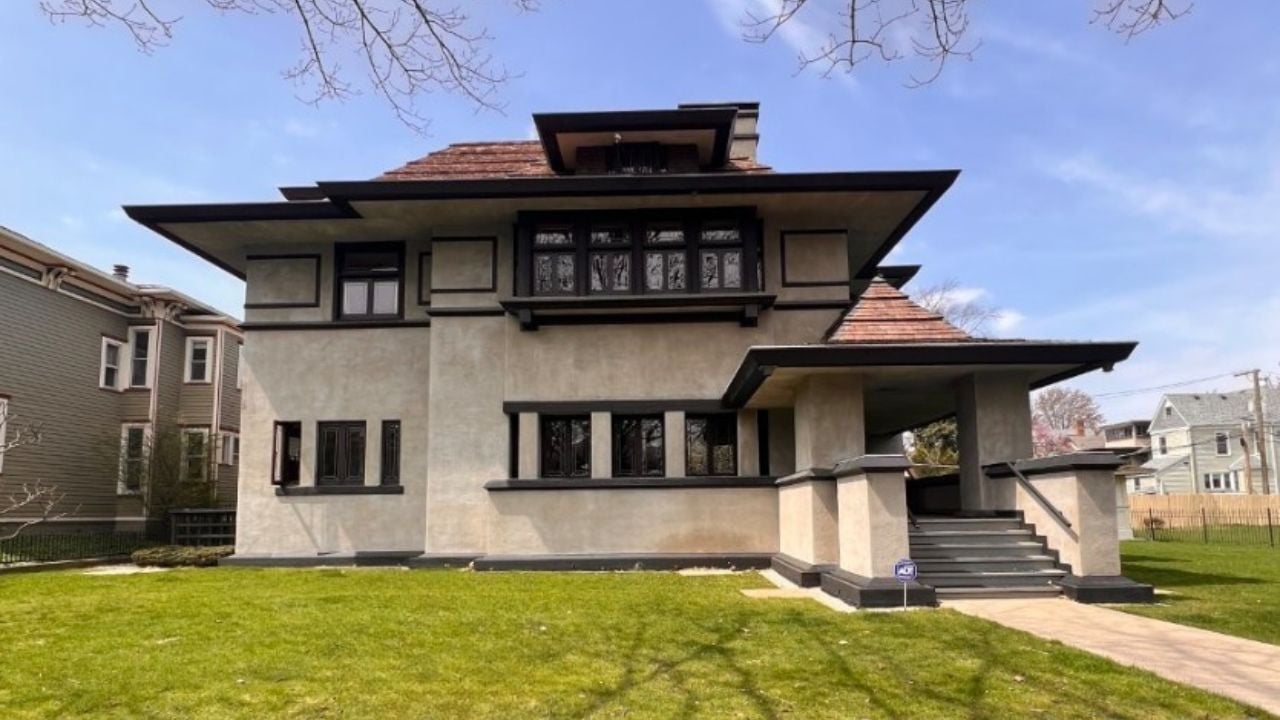
Prairie-style homes are Chicago’s homegrown modernists, and in a way they feel like the suburbs’ quiet rebels. These houses emphasize horizontal, clean lines along with low-pitched or hipped roofs. Wide eaves extend beyond the walls, which helps the house feel long and grounded rather than tall and slender. Beyond the roofline, facades often feature bands of windows that stretch across the house. Brick construction is frequently mixed with stucco, and the ornamentation is intentionally restrained so that the overall shape of the home takes center stage.
Floor Plans and Feel
Inside, open floor plans and flowing living space replace the chopped-up rooms of earlier Victorian homes, creating a sense of continuity throughout the interior. You’ll notice details such as built-in seating and decorative art glass throughout the home. The careful craftsmanship in the woodwork and trim ensures that the rooms feel intentionally connected. These single-family homes were designed to feel modern while still responding to their surroundings. Large windows bring in natural light, and many homes are positioned to take advantage of their lot, with views of gardens or nearby trees.
Notable Prairie‑Style Stops
You can treat these as anchor points on your hunt for Prairie‑style homes and buildings:
-
Frank Lloyd Wright Home and Studio, Oak Park: The birthplace of many Prairie School ideas and a must-see for understanding this architectural style in context.
-
Arthur Heurtley House, Oak Park: A celebrated early Prairie residence known for its deep overhangs, richly detailed art glass, and carefully layered brickwork.
-
Coonley Estate, Riverside: A landmark Prairie property that shows how the style adapts to a picturesque suburban setting with curving streets and generous green space.
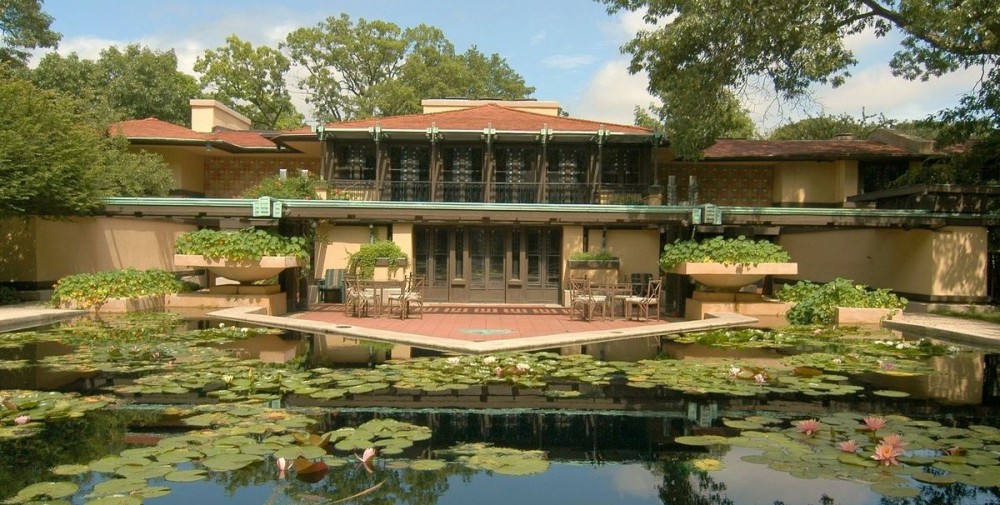
The Avery Coonley Estate designed by Frank Lloyd Wright in Riverside, IL
If you're looking for a block to stroll, head to Forest Avenue just south of Chicago Avenue in Oak Park, where a number of Wright‑designed homes are clustered.
Queen Anne and Other Victorian Homes
What Defines Victorian and Queen Anne Style?
Victorian homes, especially the Queen Anne variety, are not shy about standing out. These houses were designed to catch your eye, and they still do. You’ll often notice asymmetrical facades paired with generous wraparound porches that invite you to linger. The rooflines rarely sit still for long; one section might rise into a steep gable, while another corner suddenly lifts into a tower or turret.
Look a little closer and the details start to pile up. Bay windows often project outward from the house, pulling more light inside. Elsewhere, decorative shingles add texture to the exterior. All of these elements together give each home a personality that feels almost theatrical.
Interior Layout and Era
Most of these homes date to the late 19th and early 20th centuries, so their interiors reflect a very different way of living. As a result, the floor plans favor distinct rooms rather than wide-open spaces. Parlors were meant for receiving guests, and formal dining rooms handled gatherings that had a bit more ceremony.
You’ll also notice how much care went into the craftsmanship. Carved woodwork typically frames doorways or lines the staircases. Many homes feature stained glass in entryways or along stair landings, where sunlight turns an ordinary hallway into something magical.
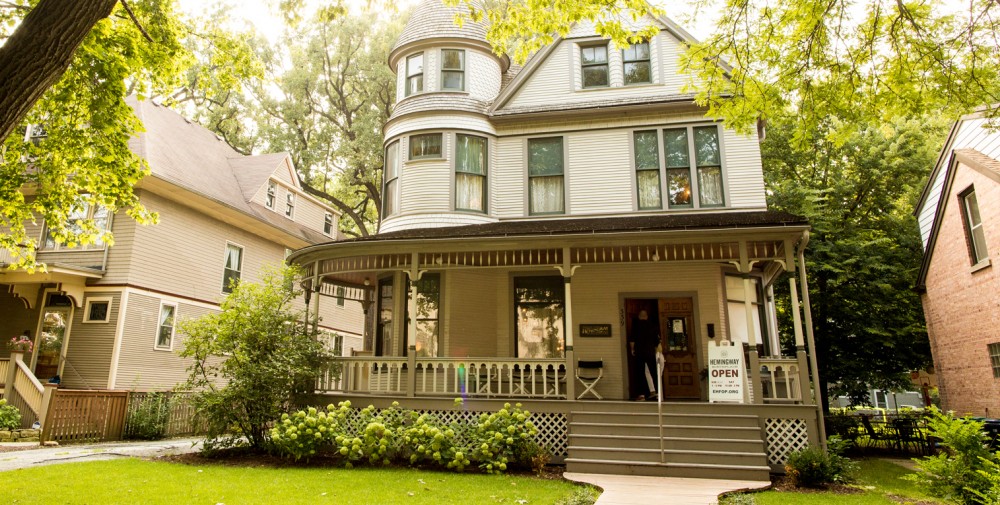
The Ernest Hemingway Birthplace Museum is a restored Queen Anne Victorian located in Oak Park, IL
Notable Victorian and Queen Anne Areas
If you’d like to see this style up close, a few spots around the near western suburbs make it easy to explore.
-
La Grange Village Historic District: A dense collection of homes from the late 19th and early 20th centuries, including many Queen Anne and Victorian showpieces. The streets form an easy walking grid, which makes it perfect for a slow architectural wander. Along streets such as Ashland and Stone Avenues, you’ll spot standout Queen Anne homes with turrets, fish‑scale shingles, and wide porches that show off the style at its most theatrical. Be sure to check out the stretch of Victorian homes on La Grange Avenue just south of the historic downtown, as well as the surrounding side streets.
-
Riverside: Here, the curving streets create a softer setting for 19th-century homes. You’ll see Queen Anne houses alongside Victorian Gothic and other picturesque styles. Try driving down Delaplaine, Nutall, or Scottswood for a few showstoppers.
-
Forest Park: Individual Queen Anne homes appear throughout the village, often marked by towers or wraparound porches that immediately catch the eye. It’s great territory for spotting architectural details.
-
Oak Park: Oak Park is famous for Prairie School architecture, but Victorian and Queen Anne houses still appear throughout the village. Many date to the late 19th century and display the archetypal towers, textured siding, and decorative woodwork. Be sure to check out the Ernest Hemingway Birthplace Museum, a gorgeous Queen Anne, where you can take a tour to learn about the life of the famous author.
American Foursquare
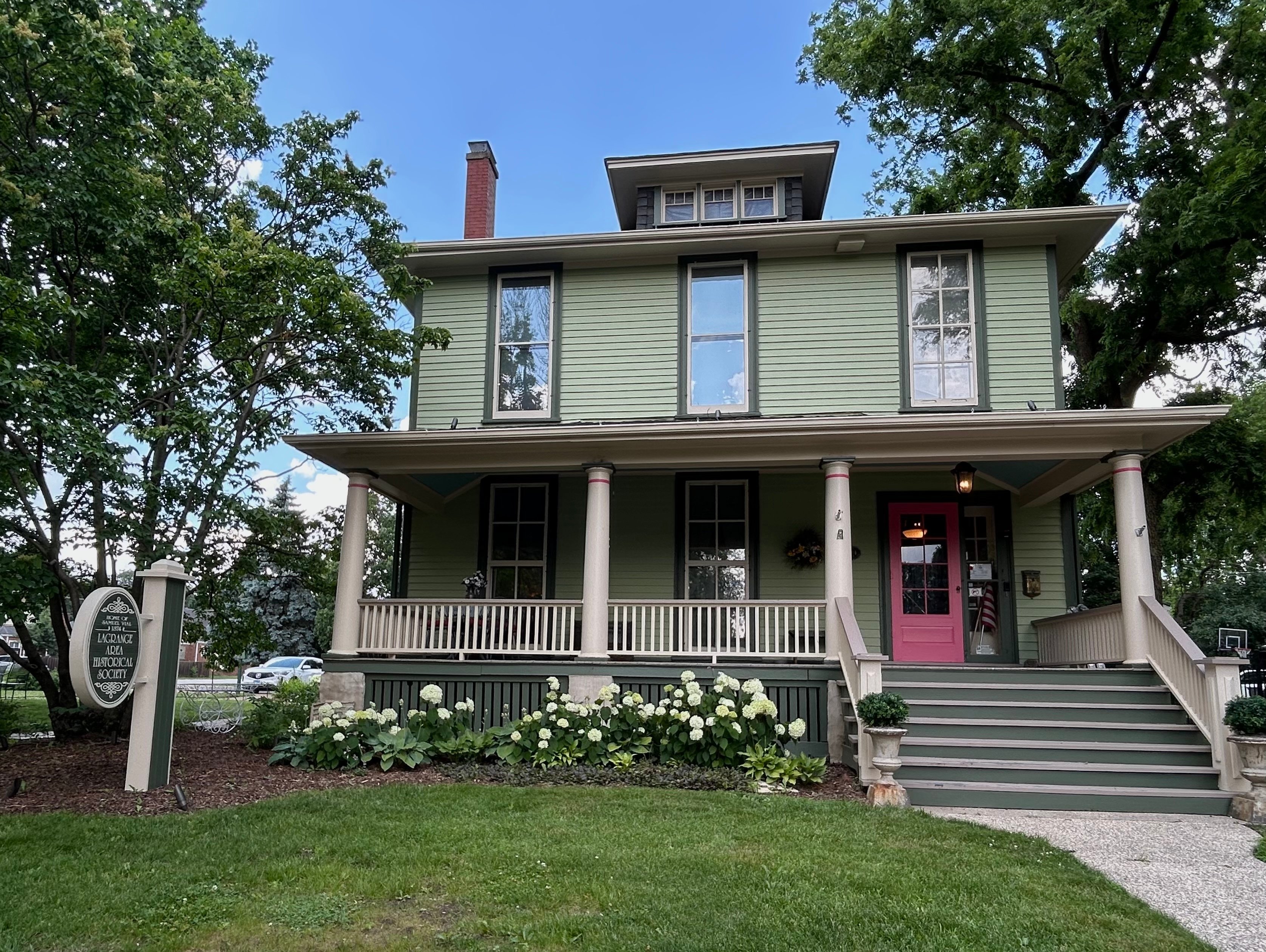 The Vial House in La Grange, IL, a classic foursquare, now houses the La Grange Area Historical Society
Hallmarks of the American Foursquare
The American foursquare is the calm, practical counterpart to the flourish of Queen Anne homes. These houses are boxy and upright, usually rising two-and-a-half stories and boasting a broad front porch. A hipped roof often caps the structure, and many homes include a single dormer centered along the front facade. That combination gives the foursquare a sturdy, no-nonsense, and instantly recognizable silhouette.
Floor Plans and Flexibility
Inside, the classic four rooms per floor layout makes the most of each level and keeps circulation simple. As you move through the living space, the rooms tend to feel generous without wasting square footage. At the same time, the houses include thoughtful details that give them personality. Trim work and staircases often carry subtle ornamentation, while many homes incorporate influences from other architectural styles. Prairie-style window patterns appear in some houses, Craftsman-style woodwork in others, and occasionally you’ll spot hints of Georgian symmetry incorporated into the overall design. Because of that flexibility, no two foursquares feel exactly the same even when the structure is nearly identical.
Where to Find Foursquares
You’ll spy American foursquares throughout several near western suburbs, where they quietly anchor entire residential blocks.
-
Oak Park: On residential streets just north and south of the main commercial corridors, long stretches of foursquares appear alongside bungalows and early revival homes, especially around the older streetcar-era blocks near Lombard, Harvey, and East Avenue.
-
River Forest: Side streets here feature larger foursquares on generous lots, which shows how the style adapts easily to more upscale settings.
-
La Grange Historic District: In La Grange, foursquares stand shoulder to shoulder with Queen Anne and Prairie homes. It’s a great place for a slow walk where you can compare architectural styles from house to house.
Midcentury Modern
Key Midcentury Modern Features
Midcentury modern homes trade ornate trim for clean lines and easy everyday living. Roofs tend to be low‑pitched or flat, with wide overhangs that stretch past the walls. Instead of small, divided windows, you’ll often see big picture windows and sliding glass doors that blur the line between indoors and out, pulling light into the main living spaces. Many homes are single‑story ranches or split‑levels with an asymmetrical footprint and attached garages, and their simple facades let the overall shape do the talking.
Floor Plans and Feel
Step inside and you’ll usually find open or semi‑open layouts that tie the kitchen and dining room together. The living room often flows right off that core, which makes the whole space feel connected without feeling formal. Look for details like wood paneling and brick or stone fireplaces that anchor the main living areas. Original midcentury finishes add another layer of warmth and character when they’re still in place, so even modest homes feel intentionally designed for everyday life and casual gatherings.
Where to Find Midcentury Homes
In the near west suburbs, Westchester is one of the best places to see midcentury homes in action. As you drive or walk through the village, you’ll notice block after block of 1950s and 1960s ranches and split‑levels that show off the era’s clean lines and indoor‑outdoor feel. Many stand out for their dramatic front windows or covered patios tucked into the side or back yard. Pay attention to how the low rooflines and attached garages create a different feel from the earlier bungalows and foursquares you’ll see in nearby towns.
Revival Favorites: Tudor, Georgian, and Cape Cod
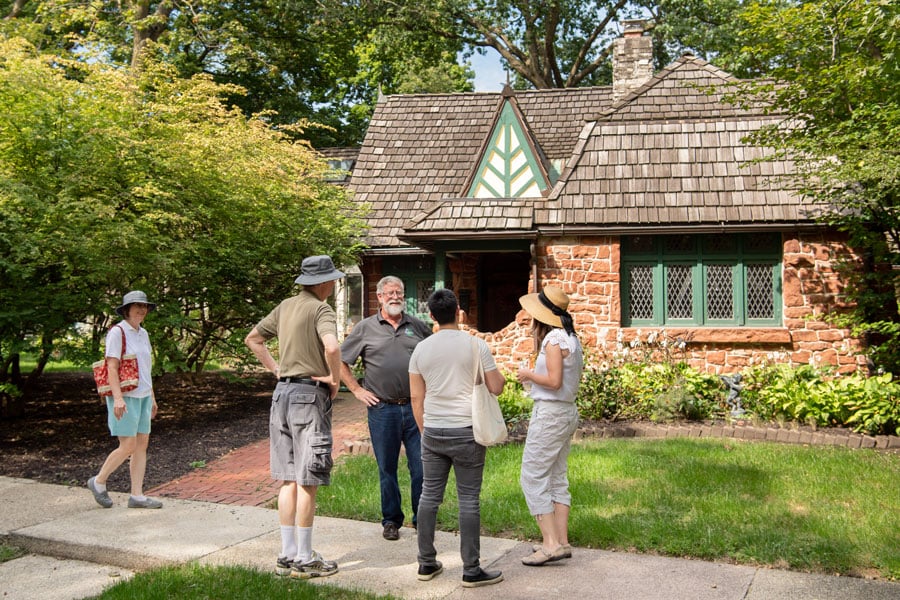
The Olmsted Society offers walking tours through historic Riverside, IL
Tudor
Tudor homes bring English cottage charm to the suburbs. In many cases, you’ll notice steep gabled rooflines paired with decorative half-timbering along the upper facade. Tall, narrow windows are common as well, and many homes combine brick construction on the lower level with stucco and dark trim above. Together, those details create the cozy, storybook look people often associate with Tudor houses. On a quiet Illinois street lined with mature trees, the style feels especially at home.
Georgian
Georgian homes, by contrast, lean into symmetry and formality. A typical Georgian facade takes the shape of a tidy rectangle with evenly spaced windows. At the center, you’ll usually find a formal front door framed by classical ornamentation. Solid brick construction reinforces a sense of permanence. Because the roofs are usually side-gabled or hipped, the house reads as balanced and composed from every angle.
Cape Cod
Cape Cod homes are compact and charming, which is one reason they remain perennial favorites. Many are one or one-and-a-half stories tall, topped with a steep gabled roof that keeps the overall profile simple. Dormers often peek out from above, bringing light into the upper floor. The facades stay straightforward, and a modest porch or stoop usually marks the entrance. Inside, efficient floor plans make these houses feel practical while still maintaining a cozy character.
Where These Styles Cluster
If you’d like to spot revival-style homes in the near western suburbs, a few areas make especially good starting points.
-
Oak Park: On residential streets west and north of the historic Prairie district, Tudor and Georgian homes appear among bungalows and foursquares. The mix makes it easy to compare architectural styles as you walk.
-
River Forest: Storybook Tudors and stately Georgians appear throughout the village, particularly on side streets off Lake Street and Chicago Avenue, where larger lots let these homes spread out.
-
La Grange Historic District: Here, Tudor and other revival homes appear alongside Victorian and Prairie houses. The result is a neighborhood where several architectural eras overlap on the same block.
Greystones, Workers Cottages, and Two‑Flats
Greystone
Greystones, stone-front buildings strongly associated with Chicago, also appear in the near west suburbs in a few variations. A classic greystone features a limestone or stone-veneer facade that immediately stands out among brick and stucco homes. Many include bay windows that bring extra light into the interior. The buildings also carry a strong vertical presence. Today they’re prized not only for their durability and craftsmanship but also for the unmistakable Chicago character they bring to suburban blocks.
Workers Cottages
Workers cottages are narrow, efficient homes originally built for working families. Most stand one or one-and-a-half stories tall with a simple gabled roof. Because these houses were designed for compact city lots, they often sit close to the sidewalk with a straightforward porch or stoop marking the entrance. Inside, the layouts remain practical and efficient, making the most of each square foot while keeping maintenance manageable.
Two‑Flats
Two-flats stack two distinct units within one building, a classic Chicago housing type that appears in nearby communities as well. Many feature brick construction and bay windows along the front facade. Because of their compact footprints, these homes offer flexible living arrangements that work well for multigenerational families or rental opportunities. And when workers cottages, greystones, and two-flats appear on the same block, they help keep both the architecture and the housing options diverse.
How to Explore: Your Architecture Day
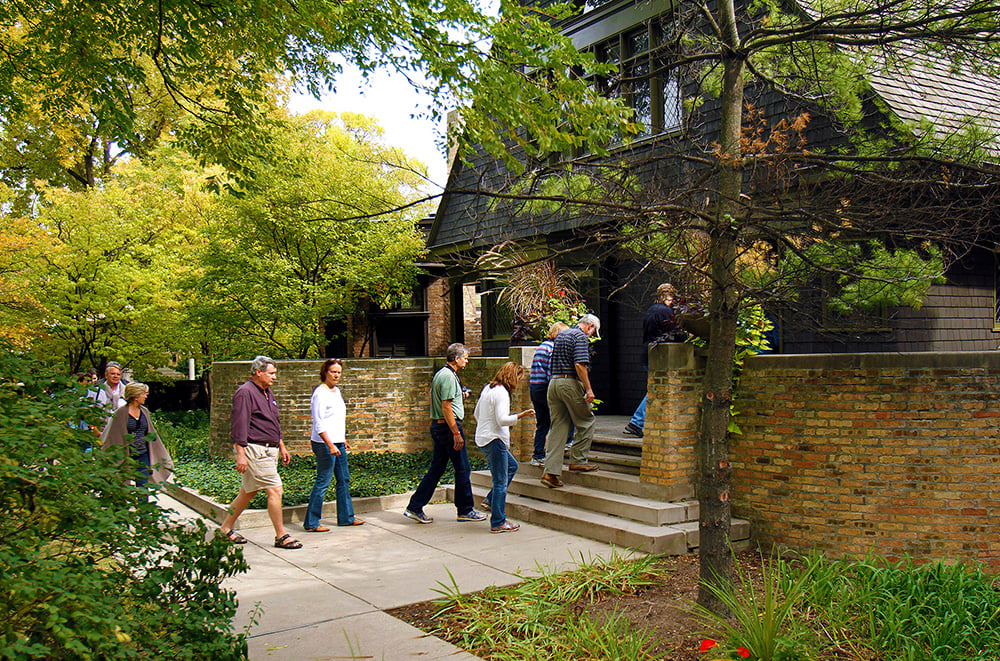 Visitors on the Frank Lloyd Wright Home and Studio tour in Oak Park, IL
Build Your Own Walking Tour
The best way to understand Chicago home styles is to see them in person, one block at a time. You might start a morning in Oak Park, where Prairie-style homes with clean lines sit near Victorian homes with exuberant ornamentation and dramatic gabled roof silhouettes, including icons like:
-
Arthur Heurtley House
-
Clusters of Wright‑designed homes along Forest and Chicago Avenues
From there, you can head to River Forest or Riverside to compare American foursquares, Tudor cottages, Georgian facades, and Chicago bungalow blocks shaped by early 20th-century growth, with highlights such as:
-
Prairie and revival homes on quiet River Forest side streets
-
The Coonley Estate and other landmark Riverside houses set along curving roads
Finally, a side trip to La Grange’s historic district lets you see Prairie School, Queen Anne, Victorian, and revival homes all woven into a single walkable village fabric:
-
La Grange Village Historic District (multiple blocks of mixed styles, including standout homes along Ashland and Stone Avenues)
-
Streets where foursquares, Victorians, and Tudors appear in quick succession
What to Look For
As you wander, pay attention to a few key details that tie everything together:
-
Rooflines: gabled roofs vs. low-pitched roofs vs. hipped roofs
-
Facades: brick construction, stucco panels, or stone greystone fronts
-
Details: front porch design, bay windows, ornamentation, and overall craftsmanship
When you pause to notice how each architectural style solves the same challenge of creating comfortable, beautiful living space, the neighborhoods begin to tell their own stories. At the same time, each home reflects the era in which it was built, along with the tastes and technology of the era. Whether you’re serious about real estate or simply enjoy spotting house styles, the near west suburbs of Illinois offer a perfect quest for architecture lovers.